Understanding Marine LED Lighting: What Works Best on Boats and Docks

Marine LED lighting is an essential part of modern boating and dock infrastructure. Whether it is used on boats, yachts, private docks, or marina walkways, the right lighting helps improve visibility, safety, and usability after dark. Unlike standard lighting, marine lighting is designed to perform reliably in wet, salty, and constantly changing environments.
This guide explains how marine LED lighting works, where different types are used, and what factors matter when choosing lighting for boats and docks. The goal is to provide clear, practical information that helps readers understand what works best in real marine conditions.
What Makes Marine LED Lighting Different
Marine LED lighting is specifically engineered for harsh marine environments. Exposure to saltwater, humidity, vibration, and temperature changes requires lighting that is far more durable than standard fixtures.
Key characteristics of marine LED lighting
- Corrosion-resistant construction
Marine lights are made from materials such as stainless steel, bronze, or marine-grade aluminium. These materials help prevent rust and surface damage caused by constant saltwater exposure. - Waterproof and sealed design
Marine lighting fixtures are sealed to prevent water intrusion. This is especially important for dock lighting, deck lights, and underwater dock lights that are continuously exposed to moisture. - Energy-efficient performance
LED technology allows marine lights to produce strong illumination while consuming less power. This is particularly important for boats where electrical capacity is limited. - Long operational lifespan
Marine LED lighting typically lasts much longer than traditional bulbs. This reduces the need for frequent replacements and ongoing maintenance.
Where Marine Lighting Is Commonly Used
Marine lighting is designed for multiple areas across boats and waterfront spaces. Each location has specific lighting needs based on how it is used.
Common marine lighting applications
- Boats and yachts
Lighting supports navigation, onboard movement, and maintenance tasks while ensuring compliance with marine safety standards. - Docks and marinas
Dock lighting improves visibility for walking, docking, and nighttime use, reducing the risk of accidents. - Decks and walkways
Deck lighting helps define walking paths and reduces trip hazards in low-light conditions. - Engine rooms and utility areas
Utility lighting allows safe inspection and maintenance of mechanical components. - Underwater areas
Underwater dock lights and boat underwater lights improve visibility below the surface and support fishing and docking activities.
Marine Lighting for Boats
Boat lighting focuses on safety, navigation, and practical use. The right lighting setup allows boat owners to operate and maintain their vessels more effectively after sunset.
Boat navigation lights
Boat navigation lights are required for safe nighttime operation. They signal a boat’s position, direction, and movement to other vessels on the water.
Why navigation lights are important
- They help prevent collisions by clearly indicating a vessel’s orientation and direction.
- They improve visibility in low-light or poor weather conditions.
- They ensure compliance with boating regulations and safety requirements.
Navigation lights are usually installed on the bow, stern, and mast, providing visibility from multiple angles.
Marine courtesy lights
Marine courtesy lights provide low-level illumination in areas where people move around on a boat. These lights are designed to be functional without being overly bright.
Benefits of marine courtesy lighting
- They improve safety by making steps, walkways, and seating areas easier to see at night.
- They create soft lighting that does not interfere with night vision.
- They consume minimal power, allowing them to remain on for extended periods.
Courtesy lights are commonly installed along decks, stairs, and interior walkways.
Marine engine room and utility lighting
Engine room lighting is essential for maintenance and safety. These spaces often have limited visibility and require focused, reliable illumination.
Why engine room lighting matters
- It allows clear visibility when checking engines, wiring, and fluid levels.
- It improves safety during repairs or emergency situations.
- It helps identify leaks, wear, or mechanical issues early.
LED marine engine room lights are widely used because they provide consistent brightness while producing less heat.
Dock Lighting and Deck Lighting Explained
Dock and deck lighting is essential for making waterfront spaces safe and usable at night. Proper lighting helps define edges, pathways, and working areas.
Marine dock lights
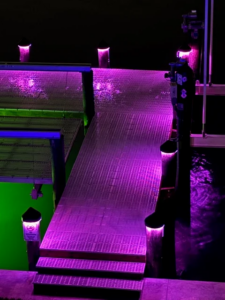
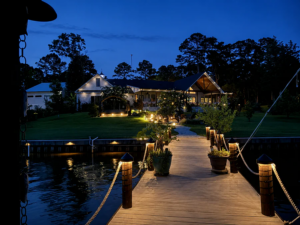
Marine dock lights are installed along walkways, edges, and access points on docks and piers.
Common purposes of dock lighting
- They illuminate walking paths to reduce slips and falls.
- They make docking easier by clearly defining dock boundaries.
- They improve overall visibility for nighttime use of marina areas.
Dock lighting in Palm Beach and other coastal locations often focuses on durability due to constant salt exposure.
Dock fishing lights
Dock fishing lights are designed to attract baitfish by illuminating the water below the dock.
How dock fishing lights help
- They draw small fish toward the light, which attracts larger fish.
- They provide underwater visibility for fishing activities.
- They operate efficiently for long periods without excessive power use.
These lights are commonly used on private docks and marina fishing areas.
Dock solar lighting
Dock solar lighting uses sunlight to charge built-in batteries during the day.
Advantages of dock solar lights
- They do not require electrical wiring, making installation easier.
- They reduce ongoing energy costs.
- They provide reliable low-level illumination for pathways and piling caps.
Solar dock lights are often used in areas where running power lines is not practical.
Marine deck lights
Marine deck lights are used to illuminate flat surfaces where people walk or work.
Why deck lighting is important
- It improves visibility across walking areas.
- It reduces trip hazards at night.
- It helps define movement zones on docks and boat decks.
Deck lighting is commonly integrated into docks, marina walkways, and boat decks.
Piling Cap Lights and Dock Visibility
Piling cap lights are mounted on top of dock pilings and serve both functional and navigational purposes.
Benefits of piling cap lights
- They clearly mark dock edges and boundaries.
- They improve nighttime visibility from both land and water.
- They provide subtle lighting without creating glare.
Piling cap lights are widely used in marina dock lights and private waterfront properties.
Underwater Marine Lighting
Underwater marine lighting is installed below the waterline and is designed for continuous submersion.
Marine underwater lights
Marine underwater lights are commonly installed along docks or seawalls.
Primary uses of underwater dock lights
- They improve visibility around docked boats.
- They enhance safety during nighttime docking.
- They support dock fishing activities by illuminating the water.
Boat underwater lights
Boat underwater lights are typically mounted on the transom or hull.
Benefits of boat underwater lighting
- They provide better visibility near swim platforms.
- They help with anchoring and docking in low light.
- They allow clearer observation of underwater conditions.
Marine Engine Room and Utility Lighting in Detail
Engine room lighting must perform reliably under challenging conditions.
Common types of engine room lighting
- LED marine engine room lights
These provide bright, consistent illumination with low heat output. - Yacht engine room lights
Designed for larger vessels, these lights focus on durability and coverage. - Marine utility lights
Used in storage and service areas where reliable task lighting is required.
LED lighting is preferred because it reduces energy use and maintenance needs.
Marine LED Lighting Solutions Overview
Marine LED lighting solutions cover a wide range of functional and environmental needs.
Advantages of marine LED lighting
- Lower energy consumption compared to traditional lighting
- Longer lifespan, reducing replacement frequency
- Consistent performance in wet and salty environments
- Reduced heat output, improving safety
These benefits make LED lighting suitable for both boats and dock installations.
Marine Lighting Comparison Table
| Lighting Type | Primary Purpose | Common Locations |
| Boat navigation lights | Safety and compliance | Bow, stern, mast |
| Marine courtesy lights | Low-level visibility | Steps, walkways |
| Marine engine room lights | Maintenance visibility | Engine compartments |
| Marine dock lights | Dock safety | Walkways, edges |
| Dock fishing lights | Fishing support | Underwater near docks |
| Piling cap lights | Boundary marking | Dock pilings |
| Marine underwater lights | Visibility below water | Docks, seawalls |
| Marine deck lights | Surface lighting | Decks and docks |
Choosing the Right Marine Lighting Setup
Selecting marine lighting depends on the environment and intended use.
Key factors to consider
- Exposure to saltwater
Coastal environments require corrosion-resistant materials. - Brightness requirements
Task areas need stronger illumination than walkways or courtesy lighting. - Power availability
Boats and docks may have different electrical limitations. - Installation location
Each area requires lighting designed for its specific conditions.
Marine Lighting in Coastal Areas
In regions such as Palm Beach, marine lighting must withstand humidity, salt air, and frequent exposure to water.
Marine lighting in Palm Beach installations often prioritise sealed fixtures and durable materials. Boat lighting Palm Beach setups commonly include navigation lights, deck lighting, and underwater lights for balanced coverage.
Conclusion
Marine LED lighting helps improve safety, visibility, and usability on boats and docks. From navigation and engine room lights to dock, deck, and underwater lighting, each type plays a clear role in supporting everyday marine activities. Choosing lighting designed for marine conditions ensures reliable performance, lower maintenance, and long-term efficiency in waterfront environments.
For more information about marine LED lighting options and their suitability for boats, docks, and waterfront environments, contact us today. We’re happy to provide clear guidance and answer any questions to help you make informed lighting decisions.
Frequently Asked Questions
2. Are marine LED lights different from standard LED lights?
Yes. Marine LED lights are designed to handle moisture, corrosion, vibration, and temperature changes found in marine environments.
3. Where should dock lights be installed?
Dock lights are typically installed along walkways, edges, pilings, and access points to improve nighttime visibility.
4. Are underwater dock lights safe?
Underwater dock lights are built with sealed housings and marine-grade materials, making them safe for continuous underwater use.
5. Why is LED lighting preferred for engine rooms?
LED lighting produces less heat, uses less power, and lasts longer, making it suitable for enclosed engine spaces.