Marine Deck Lights: Choosing the Right Lighting for Your Boat and Dock
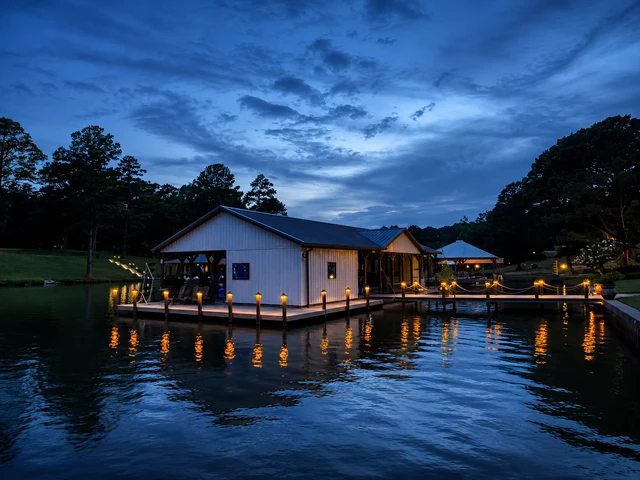
Marine deck lights help you see steps, edges, and walkways once the sun goes down. They also make a dock easier to use and a boat easier to handle at night. The right choice of marine deck lights depends on where the light sits, how much water and salt it meets, and what job it needs to do.
This guide explains how to choose deck lighting for footing, work areas, and glare control. It also covers the differences between boat deck lights and dock fixtures, with related lighting options available from DRSA.
Why Marine Lighting Must Handle South Florida Conditions
Lighting on a boat or dock faces salt spray, humidity, heat, and UV exposure every day. Standard outdoor fixtures often struggle in these conditions. Marine fixtures use sealed housings and corrosion resistant materials for that reason.
Check the materials, seals, and installation limits of the fixture you select. Construction varies across DRSA’s range, so one housing material or environmental rating should not be assumed for every light.
Based in North Palm Beach, DRSA has supplied marine lighting since 1988. The company manufactures its own fixtures and is an authorized dealer for brands including Vimar, Imtra, Lumitec, and Lumishore.
Marine Deck Lights and Dock Lighting in Palm Beach
Plan dock fixtures around pilings, paths, steps, and access points. For the boat deck, choose lights that illuminate footing and work areas without glare. Check each fixture’s exposure rating and mounting instructions.
Piling Caps, Rope Lights, and Pathway Fixtures
DRSA lists wired 12V DC piling caps in warm white and color-changing versions, with black or white cap options. Match the cap, power supply, and controller to the selected model.
Good lighting also supports safety. It marks stairs and docking areas, and it improves visibility for security cameras. In addition, a well lit dock looks better from the water.
Dock Fishing Lights and Underwater Dock Lights
Underwater dock lights illuminate nearby water and may attract baitfish. They serve a different role from lights on the walking surface, and their effect depends on water conditions and the selected fixture.
Set underwater-light depth according to the selected model’s installation instructions, tidal range, mounting structure, and water conditions. A universal depth of 3 to 4 feet is not appropriate for every fixture.
LED and Solar Dock Lighting
Compare the selected LED fixture’s power consumption and published service-life estimate. An LED lifetime figure is model specific and is not a guarantee for every dock light.
Solar markers can suit sunny locations where wiring is difficult. Wired lighting can provide predictable operation, but brightness and control options depend on the fixture, driver, and controller.
Marine Underwater Lights for Boats
Marine underwater lights sit below the waterline. They improve visibility around the boat, help with docking in dark canals, and attract baitfish for night fishing. Many owners also like the glow they add to a boat at anchor.
Mounting Styles and Color Options
Compare mounting style and color-control features separately:
- Surface mount lights: These attach outside the hull or transom. Some still require a cable hole and screw holes, so follow the selected model’s installation instructions.
- Thru hull lights: These use a fitting through the hull. Compare output, hull compatibility, servicing access, and professional installation requirements by model.
- Color-changing lights: Controller, remote, and app support depend on the selected model and any required accessories.
Two named examples are the OceanLED X8 Colours 012307C, listed at 2,300 fixture lumens with Fish-Strobe mode, and the Lumishore SUPRA TIX804, listed with a 110-degree beam and an LED array serviceable from inside the hull. Compare their separate product specifications rather than applying those features to all underwater lights.
Boat Navigation Lights
Boat navigation lights tell other vessels where you are and which way you are heading. Because of that, they are a safety and compliance item first. Style comes second.
Common navigation-light types include:
- Sidelights: red to port and green to starboard, each covering a 112.5 degree arc
- Stern lights: white, with a 135 degree arc
- Masthead lights: 225 degrees of forward visibility
- All-round lights: 360-degree visibility. The required light arrangement depends on the vessel and its operation.
- Bi color and tri color lights: for sailboats and smaller vessels
Choose navigation lights for the vessel’s required visibility range, mounting arrangement, and certification. Do not assume a single service-life estimate applies to every LED navigation light.
Marine Courtesy Lights
Marine courtesy lights are low profile, low voltage LED lights. They illuminate walkways, stairs, areas under seats, cabin floors, transoms, swim platforms, helm stations, and gunnels. They are subtle by design, so they guide your steps without harsh glare.
Types and Colors
Courtesy-light formats include:
- LED courtesy lights in warm white, cool white, blue, red, or RGB
- Recessed mount lights for stairs and decks
- Surface mount lights, which suit retrofits on older vessels
- Fixtures with an environmental rating and manufacturer approval suited to their exact mounting location
- Color changing RGB lights with remote or app control
Compare courtesy lights by published wattage, light output, and control compatibility. Installation should follow the selected fixture’s instructions and the boat’s electrical requirements.
Marine Engine Room Lights
Marine engine room lights serve a different purpose. They help you inspect, service, and repair machinery in tight, hot, vibrating spaces. Good light also makes leaks and wear easier to spot.
For spaces that require ignition protection, choose a fixture with the specified certification. DRSA’s engine room collection identifies a 30W SAE J1171 option, a Pacific G4 rated up to 2,500 lumens, and a compact 10W fixture. These are separate products, so confirm the exact model’s voltage, IP rating, and certification.
How many lights you need depends on the vessel. A small center console may need one or two. A larger sportfish or yacht needs several fixtures placed to remove shadows around the machinery.
Marine Lighting Types at a Glance
Lighting Type | Typical Location | Main Purpose | Product Selection Notes |
Marine deck and dock lights | Pilings, pathways, bulkheads, boat deck | Safety, visibility, curb appeal | LED, solar, and wired options |
Marine underwater lights | Hull, transom, dock | Visibility, fish attraction, appearance | Surface mount or thru hull; check model rating |
Boat navigation lights | Bow, stern, mast | Visibility to other vessels | Sidelights, stern, masthead, all round |
Marine courtesy lights | Stairs, gunnels, cabin, swim platform | Safe footing, ambiance | Check selected model’s rating and colors |
Marine engine room lights | Engine compartment, bilge | Maintenance and inspection | Certification and output vary by model |
How to Choose the Right Lighting
A few simple checks narrow the field quickly. First, decide what each area needs. Then match the fixture to the conditions.
Match the IP Rating to the Location
Select the environmental rating for the actual location and follow the fixture’s installation limits. For underwater use, confirm the permitted depth, duration, and saltwater application rather than relying on an IP number alone.
Pick Color by Purpose
Use shielded, appropriately placed lights for steps and walkways. Choose color and brightness to limit glare and preserve the view from the helm.
Decide Between DIY and Professional Help
Follow the selected fixture’s mounting and wiring instructions. For DRSA’s piling cap power box, a licensed electrician should connect the AC input on a GFCI-protected circuit. Confirm local permit requirements with the relevant authority.
Maintenance Tips
Clean fixtures and solar panels as their manufacturers direct. Inspect mounting hardware, cable entries, and connections, and replace only serviceable batteries or parts specified for the selected model.
If a light dims, admits moisture, or trips electrical protection, isolate power and have the fault assessed. Follow the manufacturer’s storm instructions and avoid opening sealed components or handling energized equipment.
Conclusion
Good lighting starts with matching each fixture to its job. Deck and dock lights cover footing and visibility. Underwater lights add visibility and fish attraction. Navigation lights keep you seen, and courtesy lights guide your steps on board. Engine room lights make maintenance safer.
For marine lighting in Palm Beach County, contact DRSA in North Palm Beach to compare fixtures for your boat deck, access steps, or dock.