
LED Dock Lighting Systems: Power Options, Installation Factors & Cost Expectations
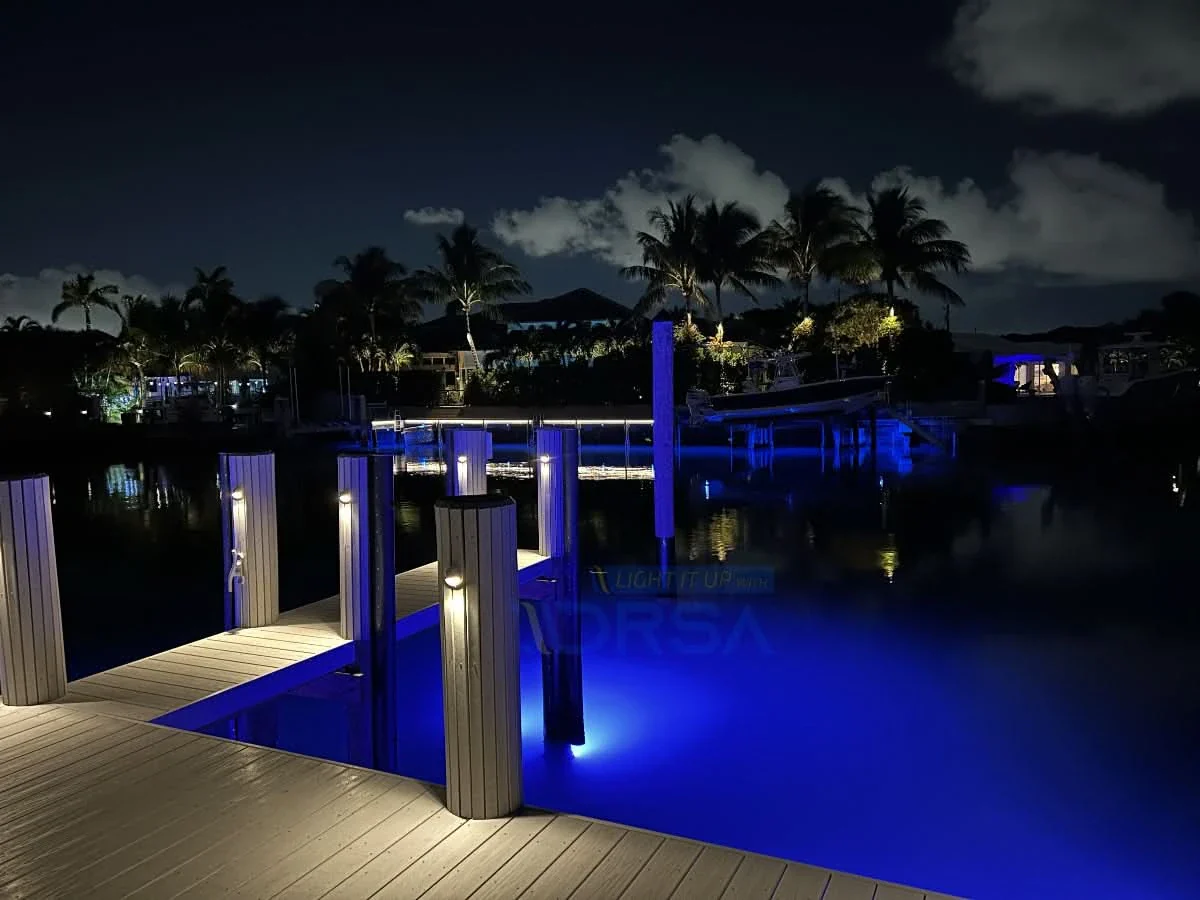
LED dock lighting is one of the most practical investments a waterfront property owner can make. Whether you manage a private boat dock, a fishing pier, or a commercial marina in Palm Beach, a well planned lighting system directly affects safety, usability, and the long term value of your property. Still, many dock owners feel uncertain about where to start. What power source should you use? How complex is the installation? What does it actually cost?
This guide answers each of those questions clearly, drawing on real world considerations for Florida’s coastal environment.
Why LED Dock Lighting Is a Smart Choice for Waterfront Properties
LED dock lighting is a top choice for waterfront property owners because it is energy efficient, long lasting, and bright. LEDs also require minimal maintenance, making them ideal for year round use in Palm Beach’s coastal climate.
Compared to older halogen or incandescent fixtures, LED systems draw far less power for the same output. That translates directly to lower electricity bills on residential docks and reduced generator load on vessels. Beyond efficiency, LED dock lighting is bright, efficient, and long lasting, ideal for both residential and commercial docks. With low voltage and high output, these fixtures provide dependable lighting with minimal maintenance.
There is also a safety dimension that is easy to overlook. Unlit docks can be hazardous. Poor visibility increases the risk of slips, falls, and boating mishaps. LED dock lighting ensures that walkways, pilings, and boarding areas are clearly illuminated, making nighttime access safer. For families, guests, and regular boaters returning after sunset, that visibility matters every single night.
Types of Marine Lighting to Consider for Your Dock System
A complete dock lighting setup usually draws from several categories of marine grade fixtures. Understanding each one helps you plan a system that covers safety, navigation, and aesthetics without overlap or gaps.
Marine Underwater Lights
Adding marine underwater lights to your boat is about creating an entirely new nighttime experience on the water. Create a stunning halo of light beneath your boat, lighting up the water with brilliant blues, greens, or full spectrum RGB colors.
For dock installations specifically, underwater lights serve two strong purposes. First, they illuminate the water column around pilings and the dock edge, making it easier to monitor conditions and spot hazards. Second, dock fishing lights are popular among anglers in Palm Beach. Submersible green lights attract baitfish and larger gamefish, creating both a practical fishing tool and a striking underwater display.
When selecting marine underwater lights, the key specifications to evaluate are lumen output, IP rating, and housing material. All marine underwater lights are made with corrosion resistant materials such as marine grade stainless steel or bronze, and they are fully sealed for long lasting performance in saltwater conditions.
Boat Navigation Lights
At Marine Lighting Palm Beach, certified navigation lights, spotlights, and floodlights meet marine safety standards. Visibility is key whether you are on the open ocean or navigating narrow inlets after sunset.
Boat navigation lights are a legal requirement for vessels operating in low light conditions, but they also play a functional role around docks. Properly placed navigation lighting helps approaching boaters identify dock boundaries and avoid obstacles. For Palm Beach waterways, where the Intracoastal sees consistent boat traffic after dark, this is a genuine safety concern rather than just a compliance checkbox.
Marine Courtesy Lights
Marine courtesy lights are low profile, low voltage LED lights used to illuminate interior and exterior areas of a boat. They are typically designed to be subtle yet effective, improving safety during nighttime navigation and adding a polished, luxurious feel to your vessel.
On docks, marine courtesy lights serve a similar function. They mark step edges, pathway borders, and boarding areas without creating glare that could affect nearby residents or other boaters. Courtesy lights come in a variety of colors and styles to match your boat’s design, creating a warm and inviting onboard atmosphere. For dock environments, warm white or amber tones are commonly chosen because they reduce glare and, in many Palm Beach County areas, are more wildlife friendly.
Spotlight: SeaBlaze X3 LED Underwater Light
One product worth understanding in detail is the Lumitec SeaBlaze X3 LED Underwater Light, a model carried as part of the marine grade product range at Marine Lighting Palm Beach. The SeaBlaze X3 offers 8,000 or more lumens of output with a lower profile and a freshly redesigned emitter array. It retains the same bronze construction and hole pattern as the X2 model, making upgrades straightforward and pricing expected to be comparable to the current model.
For dock owners and boaters who already run an earlier SeaBlaze model, this continuity in mounting hardware is a significant advantage. Upgrading does not require new through hull drilling or housing replacement, which reduces both labor time and installation cost. The SeaBlaze X3 is a surface mount underwater fixture, making it well suited for transom installations, dock pilings, and hull side placements where maximum brightness is a priority.
Power Options for LED Dock Lighting Systems
Power supply is one of the first decisions you will make when planning a dock lighting system. There are three primary options, and each suits different dock types and usage patterns.
12V or 24V DC Systems Most marine underwater lights and boat side fixtures are designed to run on 12V or 24V direct current, which is the standard electrical system on most vessels. Most underwater LEDs operate on 12V or 24V DC systems, common in marine vessels. Ensuring your boat’s electrical system can handle the load, and consulting a marine electrician for complex installations, is strongly recommended. For dock based systems that connect to a vessel’s power supply, this option keeps everything on a single power source.
Shore Power (AC Systems) Larger dock installations, particularly those serving commercial marinas or multi slip residential docks, often draw from shore power. AC connected dock lighting systems allow for higher fixture counts and brighter output without taxing any individual vessel’s battery. A licensed marine electrician should always handle the wiring for AC dock systems.
Solar Powered Dock Lighting Solar dock lighting is a low maintenance option that cuts energy costs without sacrificing performance. Solar fixtures are increasingly popular for pathway markers, piling caps, and perimeter lighting on private docks. They work well in Palm Beach’s year round sunshine. However, they are generally not powerful enough to replace primary underwater lights or high lumen fixtures in a full system.
Key Installation Factors to Plan For
Installation complexity depends on the type of fixtures you choose, your dock’s existing electrical infrastructure, and whether any drilling or permanent hardware changes are required.
Mounting Style Surface mount fixtures, such as many courtesy lights and transom mounted underwater lights, are the most straightforward to install. Through hull lights, which sit flush inside a drilled opening, require more precise work and a proper marine rated seal to prevent water ingress. For through hull lights or complex electrical setups, professional installation is recommended to ensure waterproof sealing and safety compliance.
IP Rating Requirements The IP (Ingress Protection) rating of any fixture should match where it will be placed. IP65 or higher is appropriate for spray and storms. IP66 to IP67 is better for heavy washdowns. Anything that lives underwater should be IP68. Choosing the wrong rating for the location is one of the most common and costly installation mistakes.
Wiring and Grounding Use tinned copper marine wires, heat shrink tubing, and fuse protected circuits. Label wires clearly for easy maintenance later. Always water test your install at the dock before heading out on the water. Proper grounding also reduces electrolysis risk, which is an ongoing concern in saltwater environments.
Water Conditions Water clarity and color affects fixture selection and placement. In brackish or murky water, green light cuts through better. Warm white looks comfortable on walkways. Amber can help reduce glare near homes and is wildlife friendly in many areas.
Cost Expectations: What to Budget For
Cost varies considerably based on fixture type, the number of lights in the system, and whether you hire professional installation or handle it yourself. The table below gives a general reference for common dock lighting components.
| Lighting Type | Typical Use | Relative Cost Range | Installation Complexity |
| LED Piling / Pathway Lights | Walkway and perimeter safety | Lower | Low to Moderate |
| Marine Courtesy Lights | Steps, deck edges, boarding areas | Lower to Moderate | Low |
| Underwater Dock Lights (surface mount) | Fish attraction, water illumination | Moderate | Moderate |
| Through Hull Underwater Lights | High output vessel or dock installs | Higher | High |
| Navigation Lights | Compliance and safety visibility | Moderate | Moderate |
| SeaBlaze X3 Underwater Light | High lumen surface mount installs | Moderate to Higher | Moderate |
A few points to keep in mind when estimating your budget. First, LED fixtures carry a higher upfront cost than halogen or incandescent equivalents, but the long service life and lower power draw reduce total cost of ownership over time. Second, professional installation adds to the initial cost but is strongly advisable for through hull fixtures, AC connected systems, and any installation requiring waterproof sealing. Third, the number of fixtures needed depends on dock length, the areas you want to illuminate, and the lumen output of each unit. A site evaluation with a marine lighting specialist is the most reliable way to get an accurate figure.
Maintaining Your LED Dock Lighting System
Proper maintenance extends fixture life and keeps the system performing reliably through Florida’s harsh coastal conditions.
Regular maintenance includes rinsing after saltwater exposure, cleaning off marine growth with gentle tools, inspecting seals or connectors annually, and using marine grade sealants or anti fouling coatings as needed.
Beyond cleaning, check your wiring connections periodically for signs of corrosion, especially at junction points exposed to the elements. Replacing failed gaskets or connector seals early prevents water ingress that can damage an otherwise functional fixture. For dock systems connected to shore power, have your wiring inspected by a marine electrician at regular intervals.
Conclusion
Planning an LED dock lighting system involves more moving parts than simply picking fixtures and switching them on. Power source, installation type, IP rating, water conditions, and budget all factor into a system that works reliably over the long term. The right combination of marine underwater lights, boat navigation lights, and marine courtesy lights creates a dock that is safe, functional, and visually appealing after dark.
If you are working on a dock in the Palm Beach area and want guidance tailored to your specific setup, contact Marine Lighting Palm Beach to discuss your options with a local specialist who understands both the products and the conditions.


