
Marine Underwater Lights: Surface Mount vs. Thru Hull Options
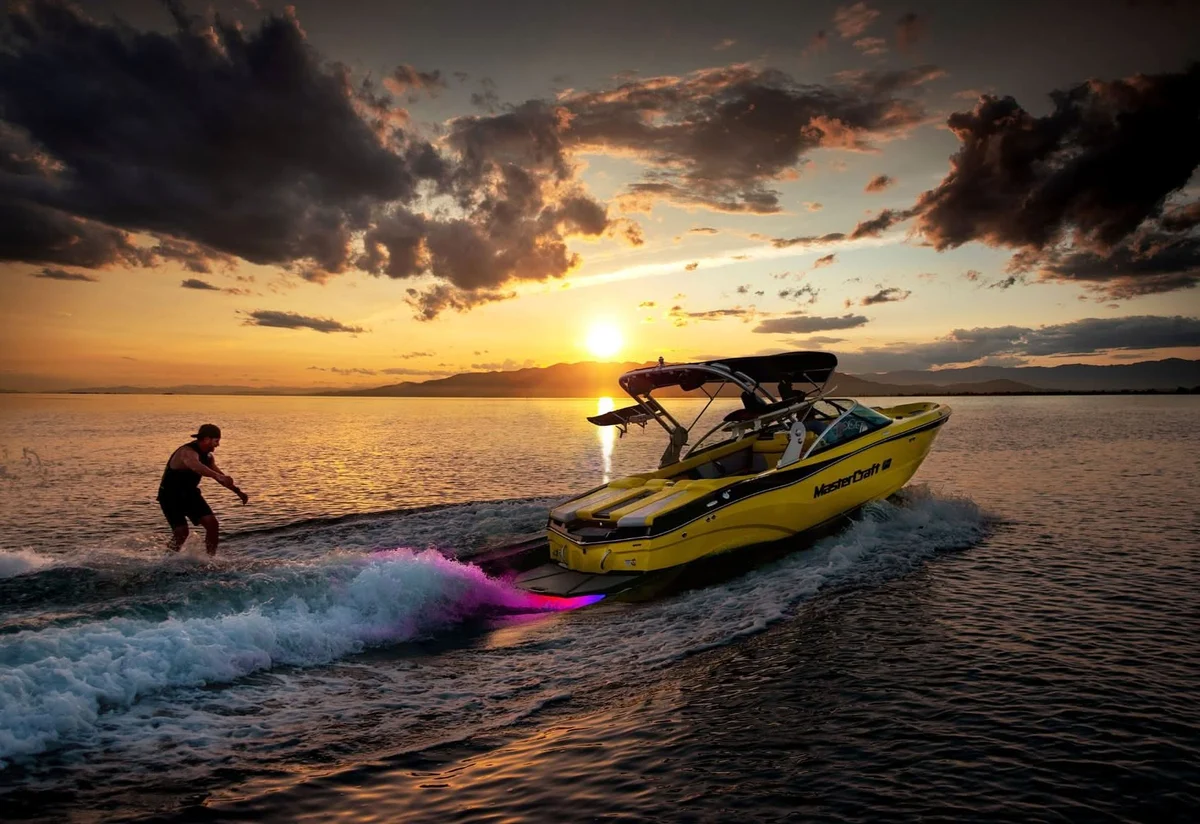
Marine underwater lights sit below the waterline and change how a boat looks and works after dark. They improve visibility around the hull, help with docking, and draw baitfish for night fishing. The biggest choice you will make with marine underwater lights is between surface mount and thru hull designs. Each suits a different boat, budget, and level of installation work.
This guide compares mounting, hull openings, servicing access, and installation planning for underwater lights sold by DRSA. Color and output matter too, but mounting style alone does not determine brightness.
What Marine Underwater Lights Do
Underwater lights can change the appearance of a boat and illuminate nearby water. Compare those uses separately from required navigation lighting and from the possible benefits for night fishing.
Appearance on the Water
Underwater lighting creates a glow beneath the boat. Color options vary by model, including single-color, dual-color, and RGBW choices. As a result, a vessel stands out whether it is docked at a marina or anchored at night.
Fish Attraction
Anglers may use underwater lighting to attract baitfish, but activity depends on conditions and the fish present. A particular species, catch result, or response time cannot be guaranteed.
Safety and Visibility
Underwater lights illuminate nearby water. They should not be relied on to identify every submerged hazard or replace the navigation lights required for the vessel.
Surface Mount Underwater Lights
Surface-mount lights attach outside the hull or transom. Their profile, mounting holes, cable routing, and output depend on the selected model.
How Surface Mount Lights Work
A surface-mount fixture still needs an installation plan. DRSA lists the OceanLED X8 with a 12.5mm cable hole and four screws, so surface mounting does not mean a hull without openings.
They also suit retrofits. If you own an older boat and want to add underwater lighting, a surface mount light is often the simpler route.
Examples From the Product Range
The OceanLED X8 Colours 012307C is a listed surface-mount example with 2,300 fixture lumens, RGBW output, and Fish-Strobe mode. Check its separate controller and installation requirements on the product page.
Thru Hull Underwater Lights
Thru-hull lights use a fitting through the hull. Compare the selected model’s output, seal requirements, hull compatibility, and servicing access. Mounting style alone does not establish greater brightness or durability.
Why Owners Choose Thru Hull Lights
The fitting profile and interior access vary by model. Check the dimension drawing, clearance requirements, and servicing method before choosing a thru-hull light.
The Lumishore SUPRA TIX804 010-04527-00 is listed with dual-color blue/white output, 13,500 white fixture lumens, and a 110-degree beam. Its internal LED array and integrated driver can be serviced from inside the hull. Do not apply that servicing feature to every SUPRA model.
Installation Considerations
Thru hull installation is more involved. Have a qualified installer assess the hull opening and electrical work. The goal is a proper waterproof seal and safe wiring. A poor seal on a hull penetration is not a place to cut corners.
Surface Mount vs. Thru Hull at a Glance
Compare these mounting considerations with the selected models’ instructions.
Feature | Surface Mount | Thru Hull |
Mounting | On the transom or hull surface | Fitting through the hull; profile varies |
Installation | Model-specific drilling, sealing, and wiring | Professional installation recommended |
Best for | Retrofits and a wide range of vessels | Hulls with suitable fittings and service access |
Look | Sleek, low profile | Fully integrated |
Performance | Powerful illumination | Output depends on the selected model |
Site example | OceanLED X8: 2,300 fixture lumens, RGBW | SUPRA TIX804: dual color, 110-degree beam |
Choosing Color and Output
Once you pick a mounting style, you still need to choose color and output. Compare light output in lumens, beam angle, color options, mounting style, and the depth or clarity of the water.
Water clarity affects the visible result, but simply adding output may not solve poor visibility. Compare beam coverage, placement, and controls for the conditions where the boat is used.
Choose color for the effect you want and the conditions where you use the boat. RGBW models offer more color choices, but remote, MFD, or app operation depends on the controller and accessories.
Beam angle matters as well. A wider beam spreads light over a larger area, while a narrower one throws it farther. Compare these values on the selected product pages.
Matching Underwater Lights to Your Boat
Underwater lighting suits many boat types. Suitability depends on the hull material, mounting position, electrical supply, and installation limits.
A center console used for night fishing may call for a bright surface mount light with a fish strobe or green option. A larger yacht may suit thru hull lights that blend into the hull. A pontoon boat used for evening gatherings may benefit from color changing RGBW lights.
Hull shape also plays a part. Choose mounting positions around the hull design, available access, and intended lighting effect. Whether you are retrofitting an older boat or customizing a new build, planning the placement first saves rework later.
Marine LED Lighting and Why It Matters Below the Waterline
The listed OceanLED X8 and Lumishore TIX804 use LEDs. Compare their actual fixture output, current draw, and installation limits. LED technology alone does not guarantee low heat, longer life, or greater brightness for every product.
Check the selected underwater light’s housing material and environmental rating. The OceanLED X8, for example, is listed with an optical polymer housing and an IP68 rating. A metal housing should not be assumed across the range.
Match the selected model to fresh or salt water and follow its installation limits. Fish activity varies, so a response after a set number of nights should not be promised.
How Underwater Lights Fit With Your Other Lighting
Underwater lights are one part of a complete setup. A boat also needs navigation lighting, work lighting, and often dock lighting. Planning them together helps you avoid gaps and mismatched fixtures.
Boat Navigation Lights
Boat navigation lights show other vessels your position and direction. Underwater lights add visibility, but they do not replace required navigation lights. These are two separate jobs.
Choose navigation lights for the vessel’s required arrangement and visibility range. Confirm the selected model’s certification and service-life specification.
Marine Utility Lights
Utility lights serve onboard work areas. Choose the exact model for the compartment’s moisture, temperature, and certification requirements.
Choose utility lighting for the compartment’s actual conditions. Confirm ignition protection where required rather than inferring it from a wattage or IP rating.
LED Dock Lighting
Dock fixtures light access areas and walking surfaces. Their voltage, output, controls, and maintenance needs vary by product, so plan them separately from lights mounted underwater on the boat.
Set underwater dock-light depth according to the selected model, tidal range, mounting structure, and site conditions. Confirm its permitted submersion limits.
Installation, Upgrades, and Repairs
Good installation protects both the light and the boat. Plan cable routing, sealing, fastening, and placement from the selected model’s instructions. Placement affects both the look and the function, since it decides where the light falls in the water.
Older systems can be improved too. The website notes that outdated or failing underwater lights can be upgraded with modern LED solutions. It also mentions troubleshooting for malfunctioning fixtures. If your current lights have dimmed or stopped working, an upgrade may be easier than starting from scratch.
Follow the selected model’s installation instructions for hull openings, sealant, fastening, and wiring. Use a qualified installer where the work exceeds your skills, and confirm local requirements for dock electrical work.
Conclusion
Surface-mount and thru-hull lights differ in fittings, installation work, and servicing access. Compare those requirements alongside the selected model’s output and controls. Choose the mounting approach that suits the hull and available access.
Frequently Asked Questions