Boat & Dock Lights Not Working? A Troubleshooting Guide for South Florida Boaters
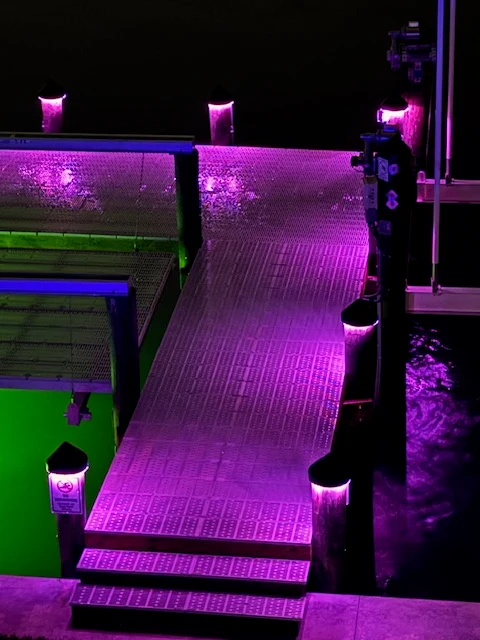
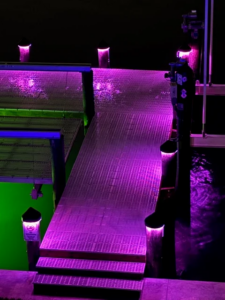
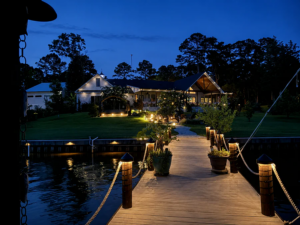
Boat dock lights are exposed to conditions that can affect lighting performance over time. In South Florida, moisture, humidity, salt air, rain, and regular waterfront use can all contribute to problems with marine lighting.
A light that suddenly stops working does not always mean the fixture itself has failed. The issue could involve the power supply, switch, wiring, connection, corrosion, or another part of the lighting system.
The same applies to boat underwater lights, boat navigation lights, marine courtesy lights, and boat engine room lights. Each system has a different purpose and installation environment, so troubleshooting should start by identifying the type of light and the symptoms.
This guide covers common problems and practical checks that boat and dock owners can make before deciding whether a lighting component needs repair or replacement.
Why Boat Dock Lights Stop Working
Boat dock lights can experience more environmental exposure than many other types of lighting.
A dock may be exposed to rain, spray, humidity, salt air, sunlight, and physical contact. Over time, these conditions can affect fixtures, mounting hardware, cables, and electrical connections.
Common symptoms include:
- A light does not turn on.
- Several lights stop working at the same time.
- A light flickers.
- A light works intermittently.
- The fixture appears dimmer than normal.
- A light works after being switched off and on.
- Visible corrosion appears around the fixture.
- Water or moisture is visible inside a light housing.
The symptom can provide an initial clue about where to look.
One Light Is Not Working
If only one fixture has stopped working while the rest of the system continues to operate, the problem may be localized to that fixture, its connection, or the wiring leading to it.
Start with a visual inspection. Look for visible damage, loose mounting, corrosion, cracked lenses, or signs of moisture.
If the fixture is damaged or water has entered the housing, replacement or further inspection may be appropriate.
Several Lights Are Not Working
When multiple lights stop working at the same time, the problem may be further upstream.
Check whether the lighting circuit has power and whether the relevant switch or control is functioning.
If other electrical equipment on the same circuit is also affected, the issue may not be limited to the lighting fixtures.
Check the Power and Switch First
Before assuming a marine light has failed, check the simplest possibilities.
If the light is controlled by a dedicated switch, confirm that the switch is operating normally. If the system uses a control panel, check whether there is an indication of a power or circuit issue.
Do not repeatedly reset a breaker or fuse if it trips again. A recurring trip can indicate an underlying electrical problem that needs to be investigated.
Similarly, do not bypass a fuse or replace it with an incorrect rating simply to get the light working.
If the electrical problem is not obvious, further troubleshooting should be handled appropriately rather than continuing to modify the circuit.
Inspect Visible Wiring and Connections
Marine lighting connections can be affected by moisture and corrosion.
If wiring is accessible, look for:
- Damaged insulation
- Exposed conductors
- Loose connections
- Corrosion
- Water intrusion
- Broken cable jackets
- Signs of overheating
Do not handle exposed or damaged electrical wiring while the system is energized.
A fixture that appears to be the problem may actually be connected to a damaged cable or deteriorated connection.
Boat Underwater Lights: Common Problems
Boat underwater lights operate in an especially demanding environment because they are exposed to water by design.
If an underwater light stops working, inspect the visible part of the fixture for cracks, damage, loose mounting, or signs of water intrusion.
The type of installation also matters.
A surface mounted underwater light and a through hull fixture have different installation requirements. If a problem involves the hull, sealing, mounting, or a suspected water intrusion issue, it is not simply a bulb replacement problem.
Look for Changes in the Light
An underwater light that becomes dim, flickers, or changes color can indicate a problem with the fixture or its power supply.
However, the light itself should not automatically be blamed.
Check whether other lights connected to the same system are experiencing similar symptoms. If multiple fixtures are affected, the issue may involve the power or control side of the system.
The marine lighting information provided by the website includes underwater lighting applications and marine LED lighting, making underwater fixtures a relevant part of its service focus
Boat Navigation Lights Require Extra Attention
Boat navigation lights are different from decorative or supplemental lighting because they serve an important safety function.
If a navigation light is not working, it should not simply be treated like a nonessential cabin or accent light.
Start with basic visual checks and confirm whether the issue affects one light or the navigation lighting system more broadly.
Navigation lights also have specific requirements relating to their color, position, visibility, and operation. A replacement should therefore be appropriate for the vessel and its navigation requirements.
If a required navigation light is not functioning correctly, the issue should be addressed before relying on the vessel’s navigation lighting at night.
Marine Courtesy Lights: Common Troubleshooting Issues
Marine courtesy lights are often installed around steps, walkways, seating areas, cabins, cockpits, and other onboard spaces.
Because these fixtures can be relatively small, problems may initially appear minor.
Common issues include:
- A single fixture stops working.
- Several lights become dim.
- Lights flicker when the boat moves.
- A light works intermittently.
- Moisture appears around a fixture.
- A switch does not activate the lights.
If only one courtesy light is affected, inspect that fixture and its visible connection first.
If several lights on the same circuit stop working, check the power and control side before assuming all of the fixtures have failed.
Boat Engine Room Lights Not Working
Boat engine room lights are designed to provide useful illumination in mechanical and service areas.
A failure can make it harder to inspect equipment or work in the engine compartment, particularly in low light conditions.
When troubleshooting engine room lighting, first determine whether the problem affects one fixture or the entire lighting circuit.
Also inspect for obvious signs of moisture, physical damage, corrosion, or heat exposure.
The website includes marine engine room and utility lighting for applications such as engine rooms, utility compartments, bilges, and workshop areas. This makes engine room lighting another relevant part of the site’s marine lighting focus.
Do Not Ignore the Environment
An engine room can contain electrical equipment, machinery, batteries, pumps, and other components.
If troubleshooting requires work around these systems, it is better to avoid unnecessary electrical modifications without understanding the existing setup.
A lighting problem can be isolated to the fixture, but it can also be connected to a broader electrical issue.
Troubleshooting by Symptom
The following table can help narrow down the starting point.
Problem | Possible Area to Check | Recommended First Step |
One dock light is out | Fixture or local connection | Inspect fixture and visible wiring |
Several dock lights are out | Power, switch, or circuit | Check the lighting control and power source |
Light flickers | Connection, wiring, or fixture | Inspect for loose or damaged connections |
Light is dim | Fixture, power, or connection | Compare with other lights on the system |
Underwater light is out | Fixture, cable, or power | Inspect housing and visible components |
Navigation light is out | Fixture, connection, or circuit | Address before relying on it at night |
Courtesy light is intermittent | Fixture, switch, or connection | Check the affected light and control |
Engine room light is out | Fixture or circuit | Check the light and power source |
These are starting points rather than definitive diagnoses. Marine electrical systems can vary considerably between boats and installations.
When a Light Needs Replacement
Not every lighting failure requires a new fixture.
Replacement may be appropriate when the fixture has physical damage, has reached the end of its useful life, or has developed a problem that cannot reasonably be corrected.
However, replacing the fixture without identifying the underlying issue can result in the replacement developing the same problem.
For example, if repeated moisture intrusion is damaging fixtures, simply installing another fixture without addressing the installation conditions may not solve the issue.
The same principle applies to dock, underwater, courtesy, navigation, and engine room lighting.
When to Stop DIY Troubleshooting
Basic visual checks are one thing. Electrical repairs are another.
Stop troubleshooting and seek appropriate assistance when you encounter:
- Exposed electrical conductors
- Repeated breaker or fuse trips
- Burning smells
- Melted wiring
- Significant corrosion
- Water inside electrical components
- Unknown or modified wiring
- Problems involving multiple electrical systems
- Damage involving underwater or through hull installations
Do not continue switching equipment on if there are signs of electrical damage or water intrusion.
A professional assessment can help determine whether the issue is with the fixture, wiring, power supply, control system, or another component.
How South Florida Conditions Affect Marine Lighting
South Florida’s coastal environment can be demanding for lighting systems.
Salt air can contribute to corrosion, while humidity and water exposure can affect connections and housings. Sun exposure can also affect materials over time.
That makes routine inspection useful even when the lighting system appears to be working normally.
The website’s marine dock lighting information highlights marine suitable materials and construction for dock and deck applications, including corrosion resistant materials and weather resistant options.
Choosing lighting designed for its intended environment is therefore an important part of maintaining a marine lighting system.
Preventing Future Lighting Problems
Troubleshooting is easier when potential problems are identified early.
A practical maintenance routine can include:
Inspect Fixtures Regularly
Look for cracks, loose mounting, corrosion, discoloration, and moisture.
Check Accessible Connections
Look for visible deterioration, loose connections, or damaged cable jackets.
Keep Track of Recurring Failures
If the same fixture repeatedly fails, investigate the underlying cause rather than replacing it repeatedly.
Check After Severe Weather
Storms and heavy weather can expose lighting to additional water, debris, and physical stress.
Use Marine Suitable Equipment
The fixture should be appropriate for its installation environment, whether it is mounted on a dock, installed below the waterline, or used inside an engine room.
A Simple Troubleshooting Process
When a marine light stops working, use this order:
- Identify which light or lights are affected.
- Check the switch or lighting control.
- Check whether other electrical equipment is affected.
- Inspect the fixture for visible damage.
- Check accessible wiring and connections.
- Look for moisture or corrosion.
- Determine whether the issue is isolated or affects the entire circuit.
- Stop if the problem involves damaged electrical components.
- Replace the fixture only after considering the underlying cause.
This approach helps prevent unnecessary replacement and makes it easier to identify recurring problems.
Conclusion
When boat dock lights stop working, the fixture itself is not always the problem. Power, switches, wiring, connections, corrosion, moisture, and installation conditions can all contribute to lighting failures.
The same troubleshooting approach can be applied to boat underwater lights, boat navigation lights, marine courtesy lights, and boat engine room lights, while remembering that each lighting system has a different purpose and installation environment.
For South Florida boat and dock owners looking for marine lighting solutions, Marine Lighting Palm Beach covers marine dock and deck lighting, underwater lighting, navigation lighting, courtesy lighting, and engine room lighting as part of its marine lighting offerings.