Is Boat Accent & Underwater Lighting Legal in Florida? USCG & State Rules Explained
Boat underwater lights are a popular lighting option for vessels operating around Florida’s waterways. They can illuminate the water around a boat and complement other marine lighting systems. However, boat owners often ask whether underwater or accent lighting is legal and whether it can affect required navigation lights.
The important point is that optional lighting and required navigation lighting serve different purposes. Florida and federal navigation rules establish requirements for vessel lighting, while additional lighting needs to be installed and operated without creating confusion with those required signals.
This distinction is especially important for boat owners considering a complete lighting upgrade. Underwater lighting may be used alongside boat navigation lights, marine courtesy lights, engine room lighting, and dock lighting, but each system has a different function.
Are Boat Underwater Lights Legal in Florida?
In general, boat underwater lights are not automatically prohibited in Florida. However, their installation does not remove the vessel owner’s responsibility to comply with applicable navigation requirements.
Florida law requires vessels to have the lights and shapes required by applicable navigation rules. It also addresses the use of flashing, occulting, and revolving lights. Therefore, additional lighting should be planned with the vessel’s required navigation system in mind.
The question is not simply whether an underwater light is installed. The way the light is positioned, operated, and viewed from the surrounding water can also matter.
For example, an underwater light used while a boat is stationary at a dock has a different practical purpose from lighting used while the vessel is traveling at night.
Understanding Boat Navigation Lights
Boat navigation lights have a specific safety purpose. They help other boaters identify a vessel and understand its position and movement in conditions such as darkness or restricted visibility.
The U.S. Coast Guard explains that navigation lights are required from sunset to sunrise and during periods of restricted visibility. The exact requirements depend on the type and size of the vessel and its operating circumstances.
This means additional decorative or accent lighting should not be considered a replacement for required navigation lights.
Why Navigation Light Placement Matters
Navigation lighting uses standardized characteristics, including specific colors, locations, and visibility requirements.
Additional lights should therefore be positioned carefully. Bright or incorrectly positioned lighting can potentially make required navigation lights more difficult for another vessel operator to identify.
When planning a lighting upgrade, it is useful to separate the navigation system from optional lighting such as underwater or courtesy illumination.
Florida Rules for Additional Boat Lighting
Florida’s vessel safety requirements work alongside the federal navigation rules.
Florida Statutes require vessels operating on Florida waters to have properly serviceable lights and shapes required by the navigation rules. Florida law also requires vessel operators to comply with applicable navigation rules.
As a result, boat owners should look at their lighting system as a whole.
Additional lighting can be useful, but it should not interfere with the functions of required navigation equipment. This is particularly important when selecting colored lights, bright accent lighting, or lighting that can be seen from a significant distance.
If there is uncertainty about whether a particular installation complies with the rules for a specific vessel, the applicable federal and Florida requirements should be reviewed before the boat is operated.
Where Underwater Lighting Fits
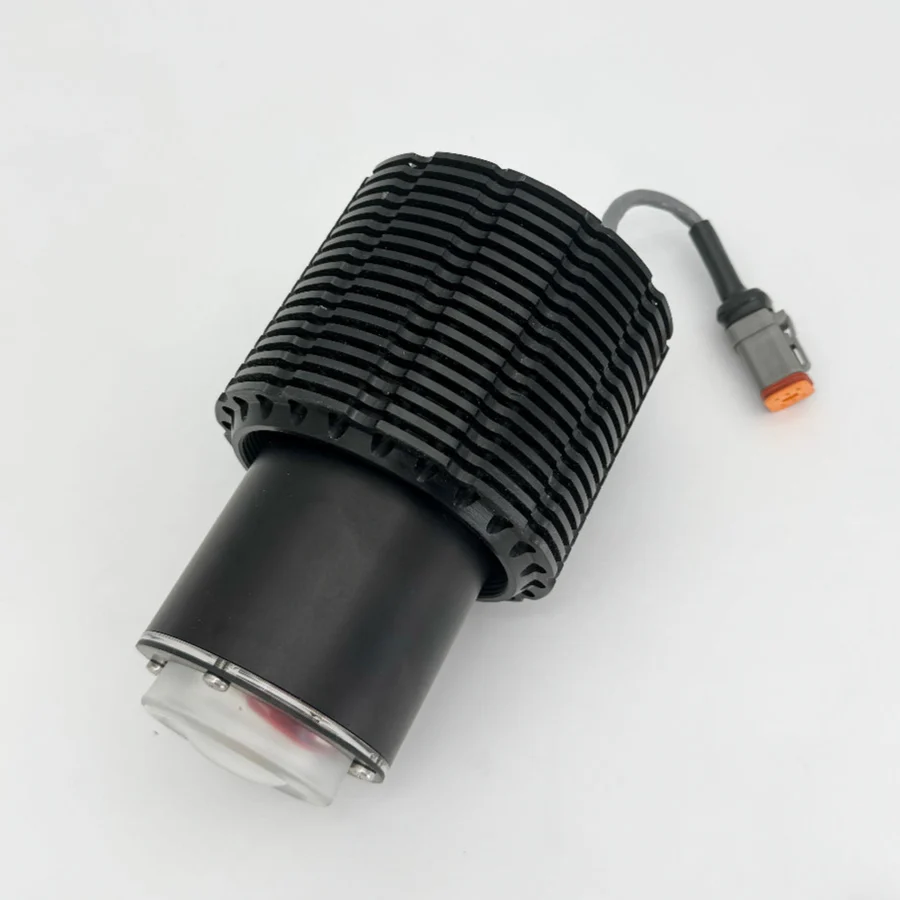
Underwater lighting is different from navigation lighting because it is installed to illuminate areas beneath or around the vessel.
Marine underwater lighting can be part of a broader boat lighting system. It can also be considered alongside other applications such as dock and deck illumination.
However, underwater lighting should remain an additional lighting system rather than being treated as a substitute for required navigation equipment.
The installation should also take the marine environment into account. Water exposure, corrosion, vibration, and electrical conditions all make marine lighting different from ordinary residential lighting.
Boat Engine Room Lights Have a Different Purpose
Boat engine room lights are designed for a different application from navigation lights.
Engine room lighting provides illumination in mechanical and equipment areas. It can make it easier to inspect components or work inside the engine compartment.
Because these lights are intended for an enclosed or service area, they should not be confused with lights used to communicate a vessel’s position to other boaters.
A complete marine lighting plan can therefore include separate systems for navigation, underwater illumination, engine room visibility, and passenger areas.
Boat Dock Lights and Waterfront Areas
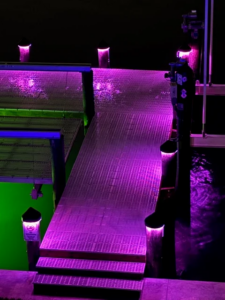
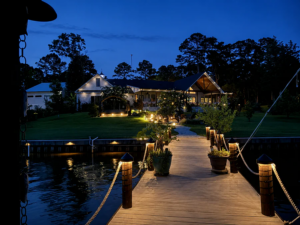
Boat dock lights are intended to provide illumination around docks and waterfront areas. They can be useful around access points, dock surfaces, and other areas where people need visibility after dark.
Dock lighting also needs thoughtful placement. A light that is too bright or poorly positioned can create glare or reflections across the water.
This is why dock lighting should be considered separately from the navigation lighting installed on a vessel.
The website’s service offering includes marine deck and dock lights as well as underwater dock lighting, making dock illumination a relevant part of its marine lighting focus.
Marine Courtesy Lights for Onboard Areas
Marine courtesy lights are another type of supplemental boat lighting.
These lights can provide illumination around areas such as:
- Walkways
- Steps
- Seating areas
- Cockpit spaces
- Entry areas
- Other onboard locations
Courtesy lighting is intended to improve visibility for people on the boat. It does not perform the same regulatory function as navigation lighting.
Brightness and placement are still important, particularly when courtesy lights are used while the vessel is underway at night. Lighting should provide useful visibility without unnecessarily affecting the operator’s view of the surrounding water.
How Different Marine Lights Work Together
A marine lighting system can include several different types of lighting. Understanding their individual roles helps avoid treating optional lighting as navigation equipment.
Lighting Type | Main Purpose | Key Consideration |
Boat underwater lights | Illuminate the water around or beneath a vessel | Should not interfere with navigation lighting |
Boat navigation lights | Communicate vessel position and status | Must meet applicable navigation requirements |
Boat engine room lights | Illuminate mechanical areas | Intended for engine and equipment spaces |
Boat dock lights | Illuminate dock and waterfront areas | Placement should minimize glare |
Marine courtesy lights | Illuminate onboard passenger areas | Should provide useful visibility without excessive glare |
The website specifically identifies these marine lighting categories within its service offerings, including marine underwater lights, boat navigation lights, marine courtesy lights, marine engine room lights, and deck and dock lighting.
What to Check Before Adding Accent Lighting
Before installing additional lighting on a boat, consider the following:
1. Check the Required Navigation System
First, identify which navigation lights the vessel must have based on its size, type, and operating conditions.
Additional lighting should complement this system rather than replace it.
2. Consider Light Color
Navigation lights use standardized colors. Additional colored lighting should therefore be selected and positioned carefully so it does not create confusion.
3. Review Light Placement
Consider what other vessels will see from different angles.
A light that looks appropriate from inside the boat may appear very different from the water.
4. Consider When the Lights Will Be Used
Some supplemental lighting may be most appropriate while a vessel is docked or stationary.
If additional lighting will be used while underway at night, its effect on visibility and navigation should be considered carefully.
5. Consider the Marine Environment
Marine lighting needs to operate in conditions involving water, humidity, vibration, and potential corrosion.
The website notes that its marine lighting work includes LED retrofits, replacement lighting, and marine LED applications for boats and other environments.
Are Accent Lights the Same as Navigation Lights?
No.Accent lights are generally supplemental lighting used for illumination or appearance. Navigation lights have a specific role under federal and state boating requirements.
This distinction is important because adding more light does not necessarily make a vessel more compliant or safer.
A boat can have several lighting systems while still needing its required navigation lights to meet the applicable rules.
For that reason, boat owners planning an upgrade should identify the purpose of each light before deciding where and how it should be installed.
Conclusion
Boat underwater lights can be part of a marine lighting setup in Florida, but they should not be treated as a replacement for required navigation lighting. Florida vessel requirements and federal navigation rules still apply to the boat’s required lighting system.
The same principle applies to boat navigation lights, boat engine room lights, boat dock lights, and marine courtesy lights. Each type has a different purpose, so the lighting should be selected and positioned according to how it will be used.
For Florida boat owners researching marine lighting options, Marine Lighting Palm Beach provides marine lighting products and services covering underwater, navigation, courtesy, engine room, deck, and dock lighting.