Marine Engine Room Lights: A Complete Buying & Installation Guide
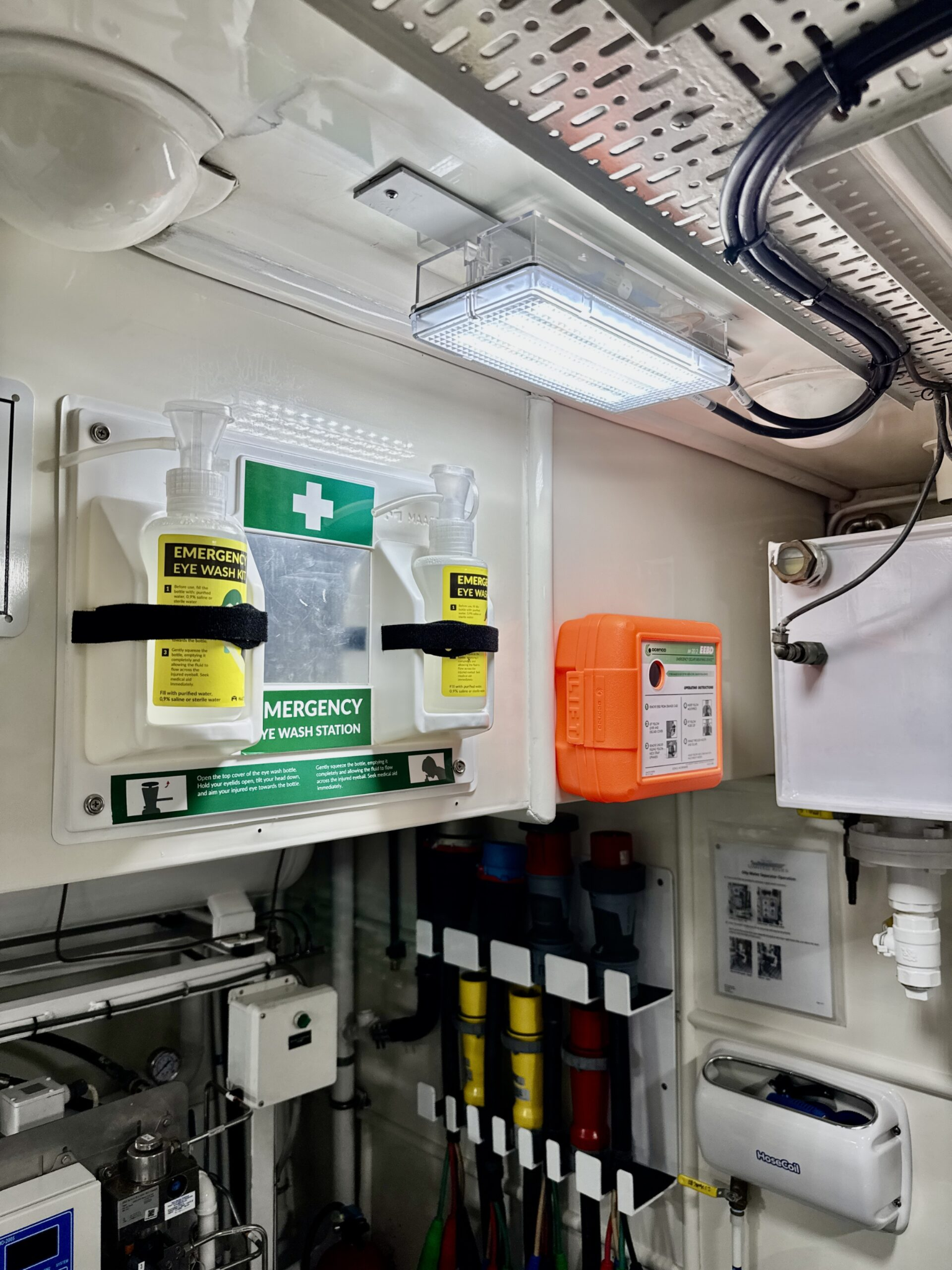
Marine engine room lights illuminate one of the most important working spaces on any boat, a compartment with no natural light where routine maintenance, inspections, and repairs all happen. Without the right lighting, even a simple task like checking a belt or spotting a leak becomes harder and slower than it needs to be, especially in tight spaces.
This guide covers what to look for in marine engine room lights, how installation typically works, and how engine room lighting fits alongside the rest of a boat’s lighting system, including marine deck lights, marine underwater lights, and boat navigation lights.
What Are Marine Engine Room Lights and Why They Matter
The engine room houses the machinery that keeps a boat running, and it is also one of the harshest environments on the vessel, exposed to heat, moisture, vibration, and the general grime of mechanical work. Proper lighting in this space is not just a convenience. It improves safety during maintenance, helps identify wear, leaks, or corrosion before they become bigger problems, and makes routine inspections faster.
LED fixtures have become the standard choice for engine room lighting because they run cool, use minimal power, and hold up well in high heat and high humidity conditions that would shorten the life of older lighting types.
Key Features to Look for in Marine Engine Room Lights
Not all engine room lights are built the same, and choosing the right fixture comes down to a few practical factors.
Feature | What to Check | Why It Matters |
Brightness | Lumen output, typically up to around 2,500 lumens per fixture | Enough light to inspect components clearly in a compact space |
Housing | Water resistant, corrosion resistant construction | Withstands moisture, saltwater exposure, and vibration |
Voltage | AC or DC compatibility | Must match the boat’s existing electrical system |
Dimming | Optional dimmer compatibility | Reduces glare during close inspection work |
Brightness and Lumen Output
Engine rooms are enclosed spaces, so a fixture needs enough output to properly light the area without requiring a handheld light for every task. Fixtures offering up to roughly 2,500 lumens are common for this purpose, giving crisp illumination across the compartment.
Housing and Water Resistance
Because engine rooms involve fuel, oil, and moisture, fixtures should have sealed, water resistant housings. A general purpose work light is not built to handle that combination safely over time.
Voltage Compatibility
Marine engine room lights are typically available in different voltage options to match a boat’s existing DC or AC power source. Confirming compatibility before purchase avoids installation issues later.
Dimming Options
Many LED marine engine room lights are compatible with dimmer controls, which can help reduce glare during closer inspection or when full brightness is not needed.
Installation Basics for Marine Engine Room Lights
Installing LED lighting in a marine engine room generally involves mounting fixtures in strategic locations around the compartment, connecting them to the appropriate DC or AC power source, and making sure connections are properly sealed and grounded to prevent corrosion or electrical hazards. Following the manufacturer’s instructions, or consulting a marine electrician, is the safest way to get this right, particularly in a space where fuel and electrical systems are close together.
How Engine Room Lights Fit Into a Complete Boat Lighting Setup
Engine room lighting covers one specific need on a boat, but it works best as part of a broader lighting plan.
Marine Deck Lights
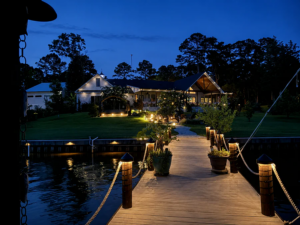
Marine deck lights illuminate the exterior deck and cockpit areas, making it easier to move around, handle lines, or work on deck at night. Where engine room lights are built for a fully enclosed compartment, deck lights are designed to hold up to open air exposure, spray, and direct sunlight.
Marine Underwater Lights
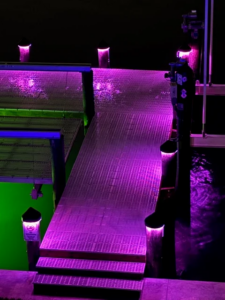
Marine underwater lights are mounted on the hull or transom below the waterline and are generally used at the dock or at anchor rather than while under way. They add visibility around the swim platform and create an appealing look at night, serving a very different purpose from the functional lighting needed in an engine room.
Boat Navigation Lights
Boat navigation lights are a separate category entirely, required by the U.S. Coast Guard for any vessel operating between sunset and sunrise. Unlike engine room, deck, or underwater lights, navigation lights follow strict legal requirements for color, arc of visibility, and minimum viewing distance based on vessel length, since their purpose is to keep other boaters aware of your position on the water.
Together, these categories cover the full range of what a boat needs, safe working conditions inside the engine room, visibility and usability on deck, an appealing look around the waterline, and legal compliance while under way.
Choosing a Marine Lighting Partner in Palm Beach
South Florida’s saltwater, sun, and humidity are especially hard on marine electrical systems, so fixtures rated for local conditions matter more here than in many other regions. Working with a marine lighting supplier that focuses specifically on engine room, deck, underwater, and navigation lighting, rather than general electrical retailers, makes it easier to get fixtures matched correctly to a boat’s size, layout, and existing power system, along with guidance on installation.
Conclusion
Marine engine room lights are a practical investment that makes maintenance safer and faster while protecting one of the most important spaces on a boat. Choosing a fixture with the right brightness, housing, and voltage for your setup, and pairing it with proper deck, underwater, and navigation lighting, results in a boat that is easier and safer to operate day and night. Marine Lighting Palm Beach offers engine room lights alongside these other categories, making it possible to plan a complete lighting system in one place.