Boat Navigation Lights: USCG Requirements & Complete Buying Guide
Boat navigation lights are not an optional accessory. They are a legal requirement for any vessel operating between sunset and sunrise, and they are one of the simplest tools for avoiding a collision on the water. Whether you are running the Intracoastal at dusk or heading offshore from the Jupiter Inlet after dark, knowing which lights you need, where they go, and how far they must be visible keeps you compliant with the U.S. Coast Guard.
This guide covers the USCG requirements by vessel size, how to choose the right fixtures for South Florida’s saltwater environment, and a few related lighting systems worth planning for at the same time, including boat dock lights, boat engine room lights, and boat underwater lights.
What Are Boat Navigation Lights and Why They Matter
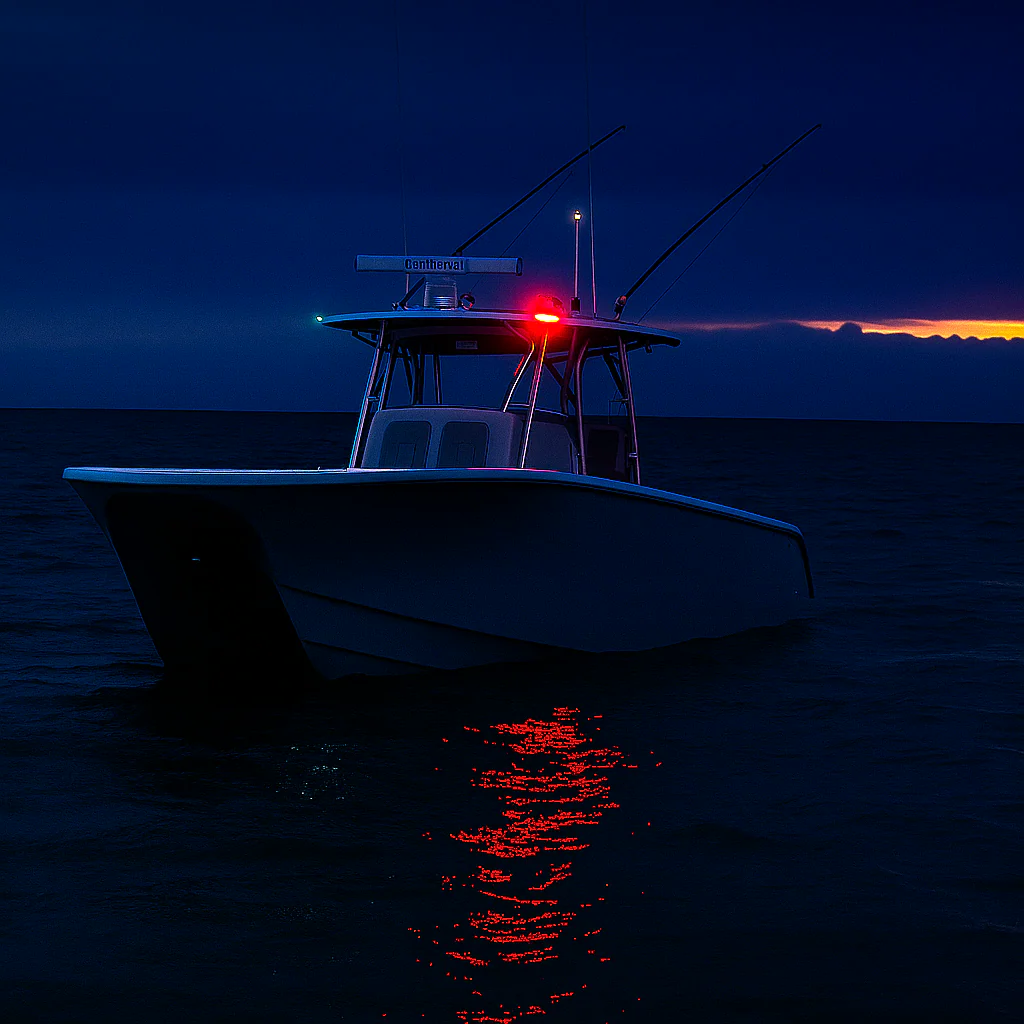
Navigation lights, sometimes called running lights, tell other vessels your boat’s position, size, and direction of travel in low visibility. A red light on port and a green light on starboard let an approaching boater know which way you are heading, while a white stern or masthead light shows whether a vessel is moving away or crossing your path.
These signals matter because sightlines are limited at night or in fog, and reaction time is short. The color code is consistent across recreational and commercial vessels, so once you know it, you can judge another boat’s direction before it is close enough to identify visually. Navigation lights are also a legal matter, since the USCG Navigation Rules set specific requirements for color, arc of visibility, and minimum viewing distance based on vessel length.
USCG Navigation Light Requirements by Vessel Size
The table below summarizes core requirements for recreational power driven vessels under way after sunset or during restricted visibility.
Vessel Length | Sidelights (Arc / Distance) | Masthead Light (Arc / Distance) | Stern Light (Arc / Distance) |
Under 12 meters (39.4 ft) | 112.5° per side / 1 nautical mile | 225° / 2 nautical miles | 135° / 2 nautical miles, or one 360° all round light in place of separate masthead and stern lights |
12 to 20 meters | 112.5° per side / 2 nautical miles | 225° / 3 nautical miles | 135° / 2 nautical miles |
20 to 50 meters | 112.5° per side / 2 nautical miles | 225° / 5 nautical miles | 135° / 2 nautical miles |
Over 50 meters | 112.5° per side / 3 nautical miles | 225° / 6 nautical miles | 135° / 3 nautical miles |
Most recreational boats, including the center consoles, bay boats, and sportfishing yachts common around Palm Beach, fall into the first category. On a boat under 39.4 feet, the sternlight can combine with the masthead light into one all round white light, which is why many smaller powerboats show only two light positions after dark: sidelights at the bow and one white light aft.
Sidelights (Port and Starboard)
Sidelights sit on either side of the bow, red on port and green on starboard, and each covers an unbroken 112.5 degree arc from straight ahead to just past the beam of the boat. Mounting them too far forward or aft can create blind spots, since even a small shift in position changes where the arc actually starts and stops.
Masthead Light
The masthead light is a forward facing white light mounted on the centerline, usually on a pole, arch, or the front of a T top. It covers a 225 degree arc and must sit higher than the sidelights so it is not obscured while under way.
Stern Light
The stern light faces aft and covers a 135 degree arc, roughly 67.5 degrees on each side of the centerline. On vessels under 39.4 feet, it is commonly combined with the masthead light into one all round fixture, which simplifies wiring and reduces the number of fixtures to maintain.
All Round White Light
An all round white light, visible through the full 360 degrees, can replace separate masthead and stern lights on smaller powerboats. It is also used to show that a boat is anchored outside a designated mooring area at night.
How to Choose the Right Boat Navigation Lights
Picking navigation lights comes down to matching the fixture to your boat’s length and confirming it carries USCG certification for color, arc, and visibility distance. A light that looks similar to a compliant fixture is not automatically legal if it has not been tested and certified to meet these standards.
South Florida’s saltwater, sun, and humidity are hard on marine hardware, so fixtures with sealed, corrosion resistant housings hold up better over time than lights built for general use. LED fixtures also draw very little current, which helps preserve battery power for fish finders, livewells, and other electronics during a long day on the water, though batteries should still be tested regularly since low current draw can mask a failing connection.
Marine Lighting Palm Beach carries navigation lights for sidelights, stern lights, masthead lights, all round lights, and combination bi color and tri color fixtures for sailboats and smaller vessels, sourced from brands including Lopolight, Lumitec, and SI Seahunter. If you are outfitting a center console, sportfishing yacht, coastal cruiser, or sailboat, staff can help match the correct configuration to your vessel’s size and how you use it, and can connect you with a marine electrician for installation if needed.
Beyond Navigation Lights: Other Marine Lighting to Consider
Navigation lights are just one part of a boat’s lighting setup. A few other lighting categories are worth planning for alongside your running lights.
Boat Dock Lights
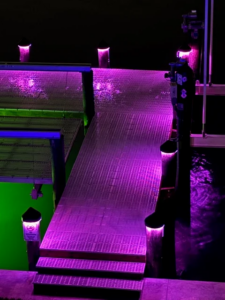
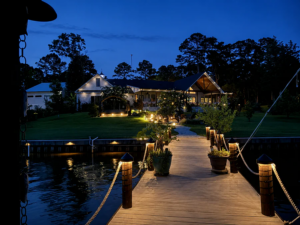
Boat dock lights illuminate the slip, walkway, and cleats where you tie up, making docking after dark safer and hazards like lines or uneven decking easier to see. Good dock lighting also helps you spot the boat from a distance when returning at night, which matters in marinas with rows of similar slips.
Boat Engine Room Lights
Boat engine room lights are used for inspections, maintenance, and troubleshooting in a space with no natural light. Since engine rooms involve fuel, oil, and moisture, fixtures there should be sealed and rated for a marine environment rather than a general purpose work light.
Boat Underwater Lights
Boat underwater lights are mounted on the transom or hull below the waterline and are typically used at the dock or at anchor rather than while under way. They help with visibility around the swim platform and are separate from the navigation lighting required while a vessel is moving.
Each of these lighting types serves a different purpose than navigation lights, but they are often installed and maintained together as part of a boat’s overall electrical system, which is why Marine Lighting Palm Beach offers all of them, along with marine courtesy lights, under one roof.
Simple Maintenance Habits That Keep Navigation Lights Reliable
Navigation lights only work if they are functioning when you need them. Turn on every light before leaving the dock, even on a daytime trip that might run late, and look for corrosion at the base of each fixture, particularly on boats kept in saltwater. Replace cracked or fogged lenses, since a damaged lens can dim the light below the required visibility distance, and check wiring connections at the fixture and helm switch, since a loose connection is a common cause of intermittent lights.
Conclusion
Boat navigation lights are a straightforward but essential part of operating any vessel after sunset. Matching the correct sidelights, masthead light, and stern light, or all round light, to your boat’s length keeps you compliant with USCG rules and visible to other boaters. Marine Lighting Palm Beach has served local boaters from North Palm Beach since 1988, and if you are updating your setup, it is also worth thinking about dock, engine room, and underwater lighting, so the whole system is reliable and suited to how you use the boat.