Marine Dock Lights: Types, Placement Strategies & LongTerm Performance Insights

Marine dock lights play an important role in improving visibility, safety, and functionality around docks, marinas, waterfront properties, and vessels. Whether installed on a private dock or integrated into a marine vessel, lighting systems are designed to support navigation, accessibility, and operational efficiency in low light conditions.
Today, marine lighting solutions extend beyond simple illumination. Products such as marine underwater lights, marine courtesy lights, boat navigation lights, and boat engine room lights each serve a specific purpose within the broader marine environment. Understanding the differences between these lighting systems and knowing where to place them can help property owners and boat operators make informed decisions for long term performance.
Understanding Marine Dock Lights
Marine dock lights are lighting fixtures specifically designed for use in marine and waterfront environments. Unlike standard outdoor lighting, marine grade fixtures are built to withstand moisture, salt exposure, temperature fluctuations, and other environmental challenges common around docks and boats.
These lighting systems can be installed on:
- Residential docks
- Marina facilities
- Boat slips
- Piers
- Walkways
- Waterfront structures
Their primary purpose is to improve visibility during evening hours while supporting safer movement around the waterfront.
Common Types of Marine Lighting Systems
Marine Dock Lights
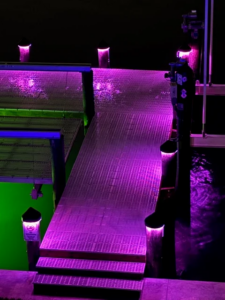
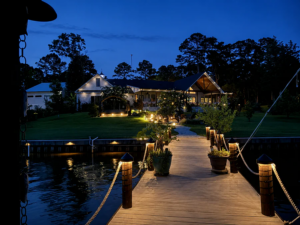
Marine dock lights are commonly installed along dock edges, pilings, and walkways. They help illuminate pathways and define dock boundaries after sunset.
Common applications include:
- Dock perimeter lighting
- Slip identification
- Walkway illumination
- General waterfront visibility
Properly positioned dock lighting can help users navigate the area more easily while improving overall visibility.
Marine Underwater Lights
Marine underwater lights are installed below the waterline on docks or vessels. These fixtures create underwater illumination and can enhance visibility around the structure.
Common uses include:
- Waterfront aesthetics
- Dock perimeter visibility
- Marina lighting enhancements
- Vessel lighting applications
Because underwater environments present unique challenges, these fixtures are typically designed to operate under continuous water exposure.
Marine Courtesy Lights
Marine courtesy lights provide low level illumination in areas where bright lighting is unnecessary. They are commonly used to improve visibility without creating excessive glare.
Typical installation areas include:
- Steps
- Walkways
- Seating areas
- Deck spaces
- Boarding points
Their subtle illumination can help users move safely around marine environments during evening hours.
Boat Navigation Lights
Boat navigation lights serve a critical role in vessel visibility and directional awareness. These lights help indicate a vessel’s position and movement in accordance with applicable marine navigation requirements.
Common navigation lighting includes:
- Port lights
- Starboard lights
- Stern lights
- Masthead lights
Proper installation and maintenance of navigation lighting are essential for safe vessel operation.
Boat Engine Room Lights
Boat engine room lights are designed to provide illumination in mechanical and service areas of a vessel.
These lighting systems assist with:
- Equipment inspection
- Maintenance activities
- Troubleshooting procedures
- General engine room visibility
Reliable lighting in these spaces helps support routine vessel operations and maintenance tasks.
Placement Strategies for Marine Dock Lights
Strategic placement is one of the most important factors affecting lighting effectiveness. Even high quality fixtures may not deliver optimal results if installed incorrectly.
Dock Edge Illumination
Dock edges represent one of the most important locations for lighting placement. Clearly illuminated boundaries can improve visibility and help users identify walking paths.
Best practices include:
- Even fixture spacing
- Consistent light distribution
- Avoiding excessive brightness
- Reducing shadowed areas
Walkways and Access Points
Walkways, ramps, and entry points should receive sufficient illumination to support safe movement.
Important locations include:
- Dock entrances
- Boarding ramps
- Transition areas
- Stairways
Balanced lighting helps maintain visibility without overwhelming users with excessive glare.
Waterfront Visibility
Lighting positioned around waterfront structures can improve overall visibility of the surrounding area.
Common placement locations include:
- Pilings
- Dock posts
- Marina access areas
- Waterfront gathering spaces
A well planned lighting layout often creates a more functional environment while supporting safe navigation around the property.
Boat Integration
When docks regularly accommodate vessels, lighting plans should consider both dock based and vessel based illumination.
Combining marine dock lights with:
- Boat navigation lights
- Marine courtesy lights
- Boat engine room lights
- Marine underwater lights
can create a more cohesive marine lighting system.
Factors That Influence Long Term Performance
Marine environments are demanding. Therefore, fixture selection and installation methods significantly affect long term reliability.
Environmental Exposure
Marine lighting systems are exposed to:
- Salt air
- Humidity
- Rain
- UV radiation
- Temperature changes
Fixtures designed specifically for marine environments are typically better equipped to handle these conditions over time.
Material Quality
Materials play a major role in fixture durability.
Common marine grade materials include:
- Stainless steel
- Bronze
- Corrosion resistant alloys
- Marine grade polymers
Selecting appropriate materials can help reduce wear caused by environmental exposure.
Energy Efficiency
Modern marine lighting systems often utilize LED technology due to its efficiency and longevity.
Potential advantages include:
- Lower energy consumption
- Reduced maintenance frequency
- Consistent illumination
- Long operating life
LED based systems are widely used across dock, underwater, courtesy, and vessel lighting applications.
Maintenance Considerations
Routine inspections can help identify potential issues before they become larger problems.
Maintenance may include:
- Cleaning lenses
- Checking connections
- Inspecting mounting hardware
- Verifying fixture operation
Regular maintenance helps ensure lighting systems continue functioning as intended.
Comparing Marine Lighting Applications
| Lighting Type | Primary Purpose | Common Installation Area | Typical Visibility Range |
| Marine Dock Lights | Dock and walkway illumination | Docks, piers, marina walkways | Localized area lighting |
| Marine Underwater Lights | Underwater visibility and illumination | Below waterline | Underwater surrounding area |
| Marine Courtesy Lights | Low level pathway lighting | Decks, steps, walkways | Short range visibility |
| Boat Navigation Lights | Vessel identification and navigation | Vessel exterior | Regulatory navigation visibility |
| Boat Engine Room Lights | Mechanical area illumination | Engine compartments | Workspace illumination |
Choosing the Right Marine Lighting Solution
Selecting marine lighting depends on the intended application, environmental conditions, and installation location.
When evaluating lighting options, consider:
- Fixture purpose
- Installation environment
- Power requirements
- Material construction
- Maintenance accessibility
A comprehensive lighting plan often combines multiple lighting types to support different operational needs across the property or vessel.
Conclusion
Marine lighting systems serve a variety of practical functions across docks, vessels, marinas, and waterfront properties. From marine dock lights that improve visibility along walkways to marine underwater lights that illuminate submerged areas, each lighting category addresses a specific need.
Likewise, marine courtesy lights enhance accessibility in low light environments, while boat navigation lights and boat engine room lights support vessel operation and maintenance. By understanding placement strategies and long term performance considerations, property owners and boat operators can make informed decisions when planning marine lighting installations.